Buy slubzsercem.pl ?
We are moving the project
slubzsercem.pl .
Are you interested in purchasing the domain
slubzsercem.pl ?
domain@kv-gmbh.de · 0541-91531010
Buy slubzsercem.pl ?
What are conjunctional clauses, relative clauses, demonstrative clauses, and infinitive clauses?
Conjunctional clauses are dependent clauses that are introduced by a conjunction, such as "because," "although," or "while." They provide additional information about the main clause in a sentence. Relative clauses are also dependent clauses that provide more information about a noun in the main clause. They are introduced by relative pronouns like "who," "which," or "that." Demonstrative clauses are dependent clauses that function as adjectives and provide more information about a noun in the main clause. They are introduced by demonstrative pronouns like "this," "that," "these," or "those." Infinitive clauses are dependent clauses that are formed with an infinitive verb (to + base form of the verb). They can function as nouns, adjectives, or adverbs in a sentence. **
Are conjunctive clauses always adverbial clauses?
No, conjunctive clauses are not always adverbial clauses. While adverbial clauses are a type of conjunctive clause that function as adverbs to modify verbs, adjectives, or other adverbs, there are also other types of conjunctive clauses. For example, there are conjunctive clauses that function as noun clauses, such as in "I know that you are busy." In this sentence, "that you are busy" is a conjunctive clause functioning as a noun clause, not an adverbial clause. Therefore, conjunctive clauses can serve various grammatical functions beyond just adverbial clauses. **


Similar search terms for Clauses
Top-Angebote
Products related to Clauses:
-
Uplift Treasures Bride And Groom Bachelorette Party Sunglasses Set 10pcs Glasses BProduct Description: Make bridal celebrations even more memorable with this fun 10piece party sunglasses set. Featuring stylish square and heartshaped designs in black, white, and pink, these glasses are perfect for bachelorette parties, bridal...49,97 $*Shipping: 0,00 $Secure redirect to the provider
-
Women Boutique White Bride Cowgirl Hat Rhinestone Wedding Cowboy Hat For Bachelorette Party Bridal Western Hat White Bride Cowgirl Hat Rhinestone Wedding Cowboy Hat For Bachelorette Party Bridal Western HatMake your special celebration unforgettable with a statement piece designed for bold bridal moments. This elegant bride cowgirl hat blends Western charm with modern bridal sparkle, turning every photo into a standout memory. Perfect for brides who...54,97 $*Shipping: 0,00 $Secure redirect to the provider




-
What are relative clauses and conjunctional clauses?
Relative clauses are clauses that provide additional information about a noun in the main clause. They are introduced by relative pronouns such as "who," "which," "that," and "whom." For example, in the sentence "The book that I read is very interesting," the relative clause "that I read" provides more information about the noun "book." Conjunctional clauses, on the other hand, are clauses that are connected to the main clause by conjunctions such as "and," "but," "or," "if," and "because." They can express relationships such as addition, contrast, alternative, condition, and cause. For example, in the sentence "I will go to the park if the weather is nice," the conjunctional clause "if the weather is nice" expresses a condition for the action in the main clause. **
-
What are the French conditional clauses (si-clauses)?
French conditional clauses, also known as si-clauses, are used to express a hypothetical situation and its potential outcome. They consist of two parts: the si clause (if clause), which describes the condition, and the main clause, which describes the potential result. The si clause is typically formed using the conjunction "si" followed by the imperfect tense or the pluperfect tense, while the main clause is formed using the conditional tense. These clauses are commonly used to talk about what would happen in certain situations if a specific condition were met. **
-
How do I transform subordinate clauses into main clauses?
To transform a subordinate clause into a main clause, you need to make sure that the clause can stand alone as a complete sentence. This means adding a subject and a verb to the clause if it doesn't already have them. You may also need to adjust the word order or add any necessary punctuation. Once these changes are made, the subordinate clause will become a main clause that can function independently within a sentence. **
-
How can main clauses and subordinate clauses be recognized?
Main clauses can be recognized by their ability to stand alone as complete sentences, containing a subject and a predicate. Subordinate clauses, on the other hand, cannot stand alone as complete sentences and are dependent on the main clause for their meaning. They often begin with subordinating conjunctions such as "because," "although," "while," or "if." Additionally, subordinate clauses often function as adverbial, adjectival, or nominal clauses, providing additional information about the main clause. **

How can subordinate clauses be rewritten as main clauses?
Subordinate clauses can be rewritten as main clauses by removing the subordinating conjunction and making any necessary adjustments to the verb tense or word order. For example, the subordinate clause "because she was tired" can be rewritten as the main clause "she was tired." This transformation allows the subordinate clause to stand alone as a complete sentence. Additionally, any pronouns or other words that were dependent on the subordinating conjunction may need to be adjusted to ensure the new main clause is grammatically correct. **
How can one recognize main clauses and subordinate clauses?
Main clauses can stand alone as complete sentences, while subordinate clauses cannot. Subordinate clauses often begin with subordinating conjunctions such as "although," "because," "if," "when," or "while." They also often contain a subject and a verb, but they do not express a complete thought on their own. Main clauses, on the other hand, express a complete thought and can function as independent sentences. By identifying these characteristics, one can recognize main and subordinate clauses in a sentence. **
Top-Angebote
Products related to Clauses:
-
Enesco/Dept 56 More Letters for the Clauses Clothtique Red , RedEvery year, Mr. and Mrs. Claus are eager to receive and read More Letters for the Clauses. The red mailbox has holiday accents including holly leaves, red berries, and a red bow; it is filled with wrapped packages and rolled-up letters. This happy...149,99 $*Shipping: 20,95 $Secure redirect to the provider
-
Enesco/Dept 56 More Letters for the Clauses African American Clothtique Red , RedEvery year, Mr. and Mrs. Claus are eager to receive and read More Letters for the Clauses. The red mailbox has holiday accents including holly leaves, red berries, and a red bow; it is filled with wrapped packages and rolled-up letters. This happy,...149,99 $*Shipping: 20,95 $Secure redirect to the provider
-
What are conjunctional clauses, relative clauses, demonstrative clauses, and infinitive clauses?
Conjunctional clauses are dependent clauses that are introduced by a conjunction, such as "because," "although," or "while." They provide additional information about the main clause in a sentence. Relative clauses are also dependent clauses that provide more information about a noun in the main clause. They are introduced by relative pronouns like "who," "which," or "that." Demonstrative clauses are dependent clauses that function as adjectives and provide more information about a noun in the main clause. They are introduced by demonstrative pronouns like "this," "that," "these," or "those." Infinitive clauses are dependent clauses that are formed with an infinitive verb (to + base form of the verb). They can function as nouns, adjectives, or adverbs in a sentence. **
-
Are conjunctive clauses always adverbial clauses?
No, conjunctive clauses are not always adverbial clauses. While adverbial clauses are a type of conjunctive clause that function as adverbs to modify verbs, adjectives, or other adverbs, there are also other types of conjunctive clauses. For example, there are conjunctive clauses that function as noun clauses, such as in "I know that you are busy." In this sentence, "that you are busy" is a conjunctive clause functioning as a noun clause, not an adverbial clause. Therefore, conjunctive clauses can serve various grammatical functions beyond just adverbial clauses. **
-
What are relative clauses and conjunctional clauses?
Relative clauses are clauses that provide additional information about a noun in the main clause. They are introduced by relative pronouns such as "who," "which," "that," and "whom." For example, in the sentence "The book that I read is very interesting," the relative clause "that I read" provides more information about the noun "book." Conjunctional clauses, on the other hand, are clauses that are connected to the main clause by conjunctions such as "and," "but," "or," "if," and "because." They can express relationships such as addition, contrast, alternative, condition, and cause. For example, in the sentence "I will go to the park if the weather is nice," the conjunctional clause "if the weather is nice" expresses a condition for the action in the main clause. **
-
What are the French conditional clauses (si-clauses)?
French conditional clauses, also known as si-clauses, are used to express a hypothetical situation and its potential outcome. They consist of two parts: the si clause (if clause), which describes the condition, and the main clause, which describes the potential result. The si clause is typically formed using the conjunction "si" followed by the imperfect tense or the pluperfect tense, while the main clause is formed using the conditional tense. These clauses are commonly used to talk about what would happen in certain situations if a specific condition were met. **
Similar search terms for Clauses
-
Uplift Treasures Bride And Groom Bachelorette Party Sunglasses Set 10pcs Glasses BProduct Description: Make bridal celebrations even more memorable with this fun 10piece party sunglasses set. Featuring stylish square and heartshaped designs in black, white, and pink, these glasses are perfect for bachelorette parties, bridal...49,97 $*Shipping: 0,00 $Secure redirect to the provider
-
Women Boutique White Bride Cowgirl Hat Rhinestone Wedding Cowboy Hat For Bachelorette Party Bridal Western Hat White Bride Cowgirl Hat Rhinestone Wedding Cowboy Hat For Bachelorette Party Bridal Western HatMake your special celebration unforgettable with a statement piece designed for bold bridal moments. This elegant bride cowgirl hat blends Western charm with modern bridal sparkle, turning every photo into a standout memory. Perfect for brides who...54,97 $*Shipping: 0,00 $Secure redirect to the provider
-
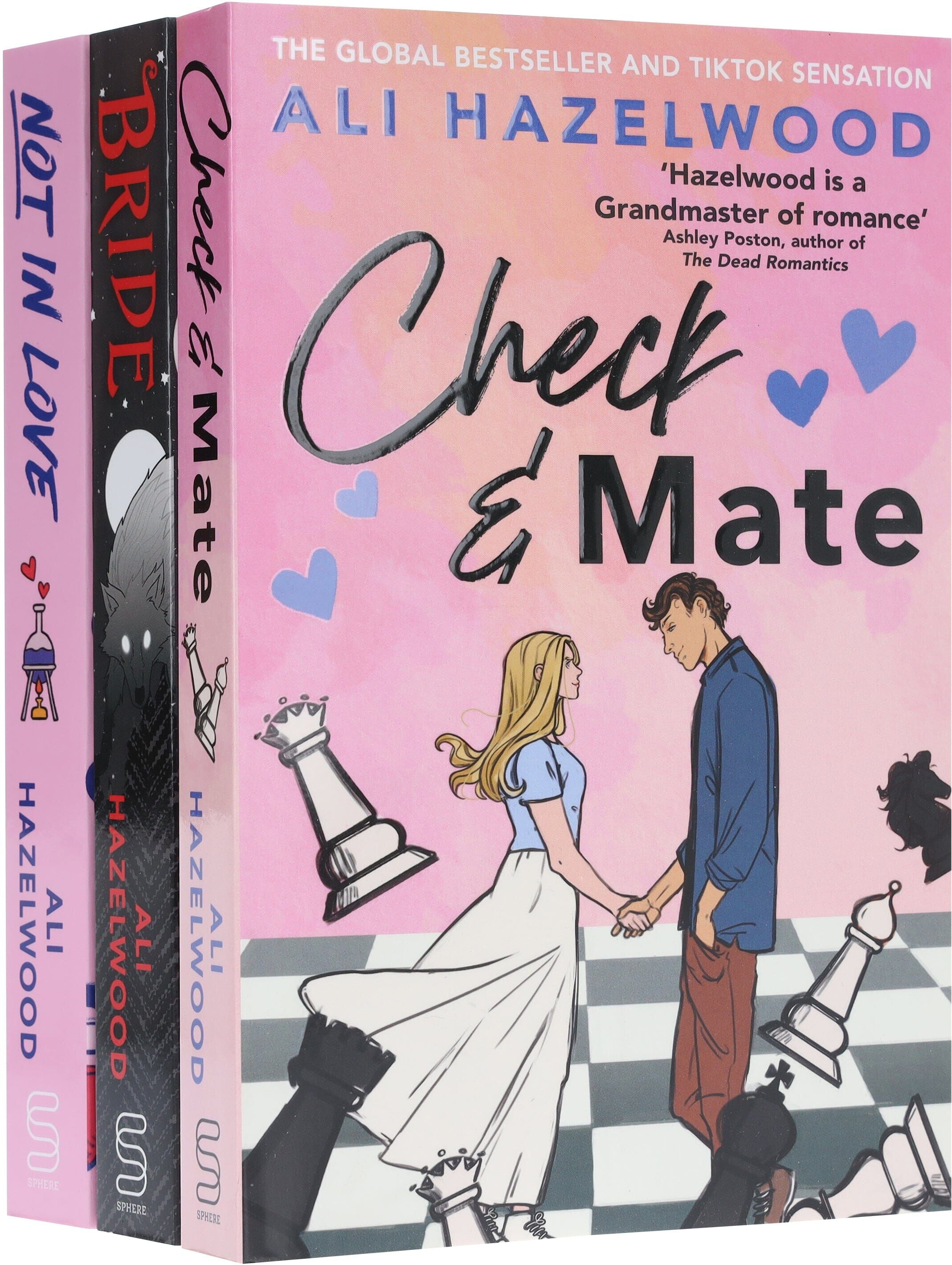
Ali Hazelwood's Check & Mate, Bride & Not in Love 3 Books Collection Set - Fiction - Paperback HachetteDescription: Check & Mate In this clever and swoonworthy new novel, life's moving pieces bring rival chess players together in a match for the heart. Mallory Greenleaf is done with chess. Every move counts nowadays; after the sport led to the destruction of her family four years earlier, Mallory's focus is on her mom, her sisters, and the dead-end job that keeps the lights on. That is, until she begrudgingly agrees to play in one last charity tournament and inadvertently wipes the board with notorious 'Kingkiller' Nolan Sawyer: current world champion and reigning Bad Boy of chess. Nolan's loss to an unknown rookie shocks everyone. What's even more confusing? His desire to cross pawns again. What kind of gambit is Nolan playing? The smart move would be to walk away. Resign. Game over. But Mallory's victory opens the door to sorely needed cash-prizes and despite everything, she can't help feeling drawn to the enigmatic strategist... As she rockets up the ranks, Mallory struggles to keep her family safely separated from the game that wrecked it in the first place. And as her love for the sport she so desperately wanted to hate begins to rekindle, Mallory quickly realizes that the games aren't only on the board, the spotlight is brighter than she imagined, and the competition can be fierce (-ly attractive. And intelligent... and infuriating...) Bride A dangerous alliance between a Vampyre bride and an Alpha werewolf becomes a love deep enough to sink your teeth into in this new paranormal romance. Misery Lark, the only daughter of the most powerful Vampyre councilman of the Southwest, is an outcast - again. Her days of living in anonymity among the Humans are over: she has been called upon to uphold an historic peacekeeping alliance between the Vampyres and their mortal enemies, the Weres, and sees little choice but to surrender herself in the exchange - again . . . Weres are ruthless and unpredictable, and their Alpha, Lowe Moreland, is no exception. He rules his pack with absolute authority, but not without justice. And, unlike the Vampyre Council, not without feeling. It's clear from the way he tracks Misery's every movement that he doesn't trust her. If only he knew how right he was . . . Because Misery has her own reasons to agree to this marriage of convenience, reasons that have nothing to do with politics or alliances, and everything to do with the only thing she's ever cared about. And she is willing to do whatever it takes to get back what's hers, even if it means a life alone in Were territory . . . alone with the wolf. Not in Love A forbidden, secret affair proves that all's fair in love and science Rue Siebert might not have it all, but she has enough: a few friends she can always count on; the financial stability she yearned for as a kid; and a successful career as a biotech engineer at Kline, one of the most promising start-ups in the field of food science. Her world is stable, pleasant, and hard-fought. Until a hostile takeover and...22,99 £*Shipping: 2,99 £Secure redirect to the provider
-
Not In Love Series (Not In Love & Problematic Summer Romance) by Ali Hazelwood 2 Books Collection Set - Fiction - Paperback HachetteTitles in this Set: 1. Not In Love 2. Problematic Summer Romance Description: Not In Love Rue Siebert might not have it all, but she has enough: a few friends she can always count on; the financial stability she yearned for as a kid; and a successful career as a biotech engineer at Kline, one of the most promising start-ups in the field of food science. Her world is stable, pleasant, and hard-fought. Until a hostile takeover and its offensively attractive front man threatens to bring it all crumbling down. Eli Killgore and his business partners want Kline, period. Eli has his own reasons for pushing this deal through – and he’s a man who gets what he wants. With one burning exception: Rue. The woman he can’t stop thinking about. The woman who’s off-limits to him. Torn between loyalty and an undeniable attraction, Rue and Eli throw caution out the lab and the boardroom windows. Their affair is secret, no-strings-attached, and has a built-in deadline: the day one of their companies will prevail. But the heart is risky business – one that plays for keeps. Problematic Summer Romance Maya Killgore is twenty-three and still in the process of figuring out her life. Conor Harkness is thirty-eight, and Maya cannot stop thinking about him. It's such a cliché, it almost makes her heart implode: older man and younger woman; successful biotech guy and struggling grad student; brother's best friend and the girl he never even knew existed. As Conor loves to remind her, the power dynamic is too imbalanced. Any relationship between them would be problematic in too many ways to count, and Maya should just get over him. After all, he has made it clear that he wants her gone from his life. But not everything is as it seems - and clichés sometimes become plot twists. When Maya's brother decides to get married in Taormina, she and Conor end up stuck together in a romantic Sicilian villa for over a week. There, on the beautiful Ionian coast, between ancient ruins, delicious foods, and natural caves, Maya realises that Conor might be hiding something from her. And as the destination wedding begins to erupt out of control, she decides that a summer fling might be just what she needs - even if it's a problematic one. Feature Specification Full Product Title Not in Love Series (2 Books Collection Set) Author Ali Hazelwood Publisher Partners Sphere / Hachette UK Ltd Format Architecture 2 Softcover Paperback Rom-Com Novels Collection Set ISBN-13 / SKU 9780089894868 / SKU LWP14156 Target Academic & Age Bracket Young Adults, New Adults & Adult Romance Readers (Ages 16+) Included Volumes 1. Not in Love, 2. Problematic Summer Romance Core Themes & Genre STEMinist romantic comedy, biotech food science, hostile corporate takeover, secret no-strings affair, age-gap romance, brother's best friend, Sicilian villa wedding fling Special Value Offerings Complete 2-book collection set, 10% BookPoints cashback rewards, direct warehouse pricing Skills & Utility Developed Screen-free...10,99 £*Shipping: 2,99 £Secure redirect to the provider
-
How do I transform subordinate clauses into main clauses?
To transform a subordinate clause into a main clause, you need to make sure that the clause can stand alone as a complete sentence. This means adding a subject and a verb to the clause if it doesn't already have them. You may also need to adjust the word order or add any necessary punctuation. Once these changes are made, the subordinate clause will become a main clause that can function independently within a sentence. **
-
How can main clauses and subordinate clauses be recognized?
Main clauses can be recognized by their ability to stand alone as complete sentences, containing a subject and a predicate. Subordinate clauses, on the other hand, cannot stand alone as complete sentences and are dependent on the main clause for their meaning. They often begin with subordinating conjunctions such as "because," "although," "while," or "if." Additionally, subordinate clauses often function as adverbial, adjectival, or nominal clauses, providing additional information about the main clause. **
-
How can subordinate clauses be rewritten as main clauses?
Subordinate clauses can be rewritten as main clauses by removing the subordinating conjunction and making any necessary adjustments to the verb tense or word order. For example, the subordinate clause "because she was tired" can be rewritten as the main clause "she was tired." This transformation allows the subordinate clause to stand alone as a complete sentence. Additionally, any pronouns or other words that were dependent on the subordinating conjunction may need to be adjusted to ensure the new main clause is grammatically correct. **
-
How can one recognize main clauses and subordinate clauses?
Main clauses can stand alone as complete sentences, while subordinate clauses cannot. Subordinate clauses often begin with subordinating conjunctions such as "although," "because," "if," "when," or "while." They also often contain a subject and a verb, but they do not express a complete thought on their own. Main clauses, on the other hand, express a complete thought and can function as independent sentences. By identifying these characteristics, one can recognize main and subordinate clauses in a sentence. **
* All prices are inclusive of VAT and, if applicable, plus shipping costs. The offer information is based on the details provided by the respective shop and is updated through automated processes. Real-time updates do not occur, so deviations can occur in individual cases. ** Note: Parts of this content were created by AI.